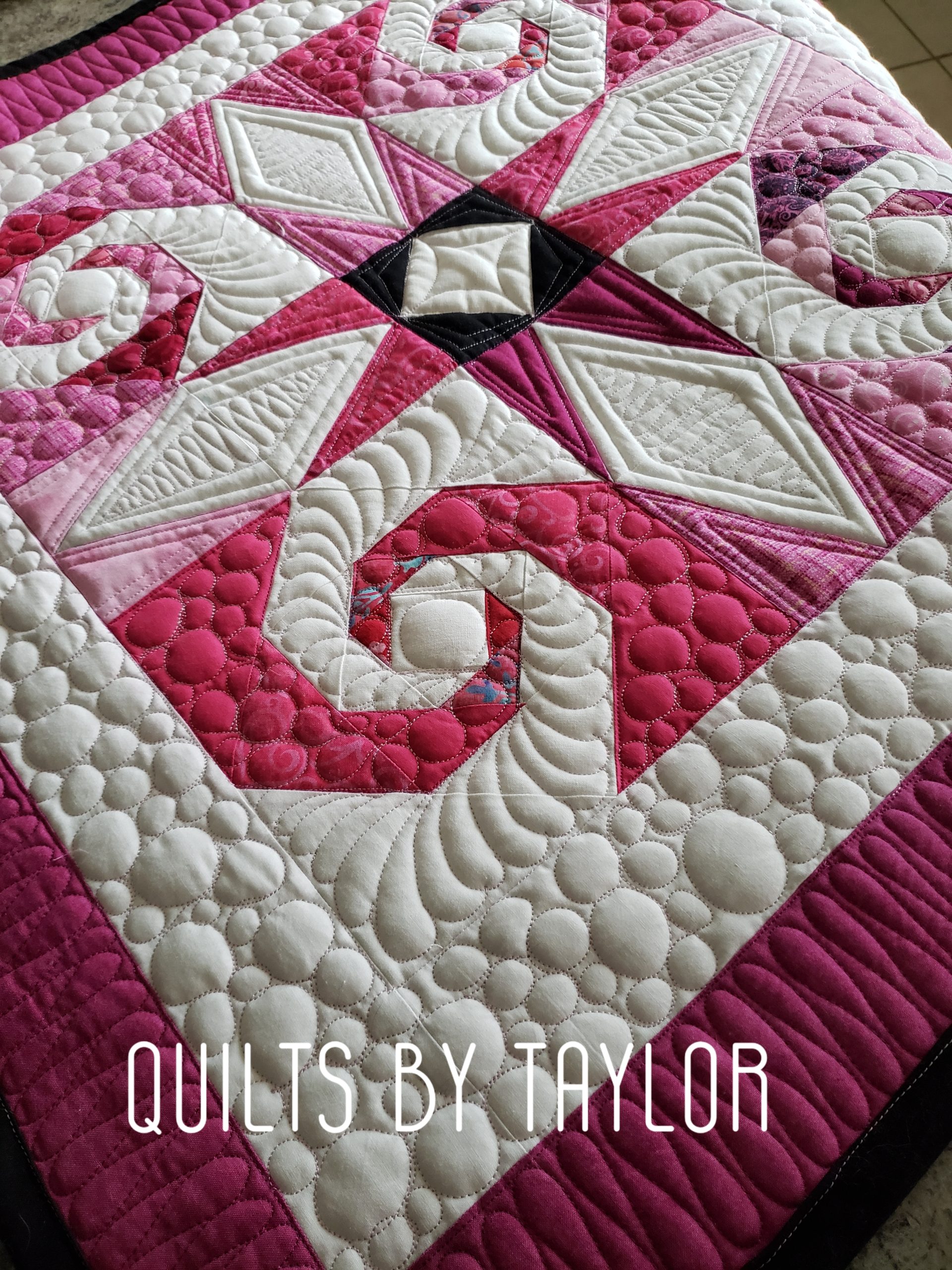
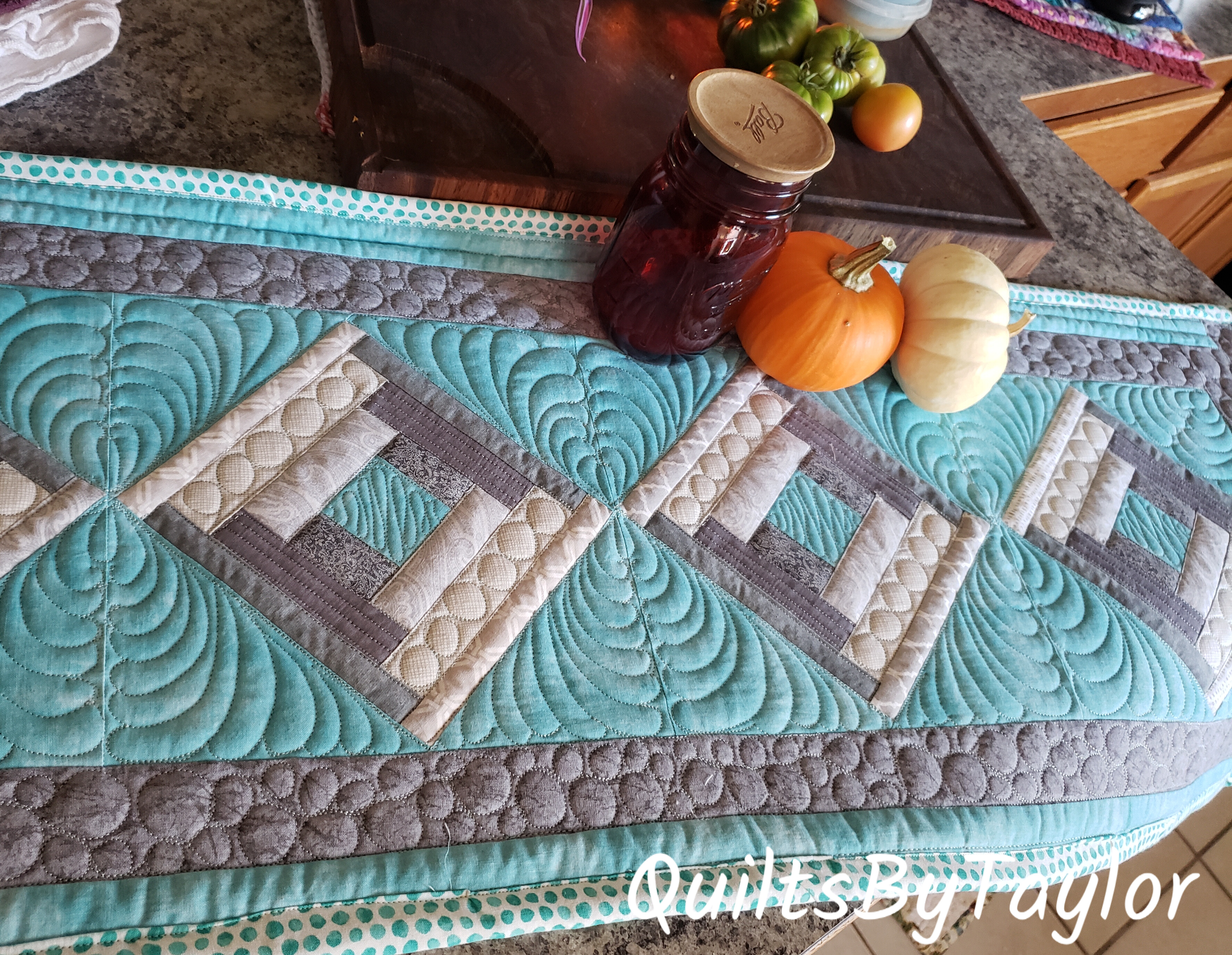
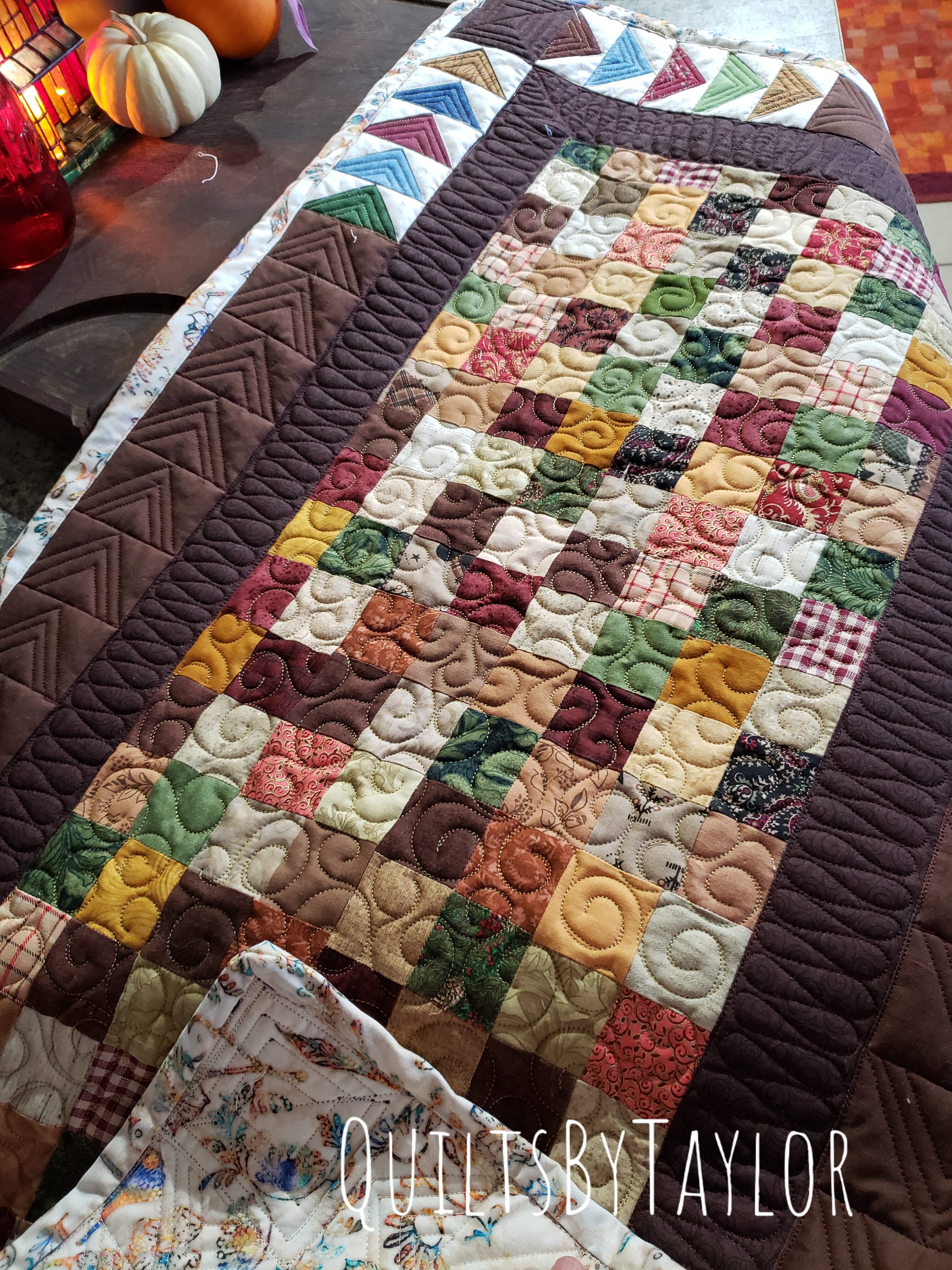
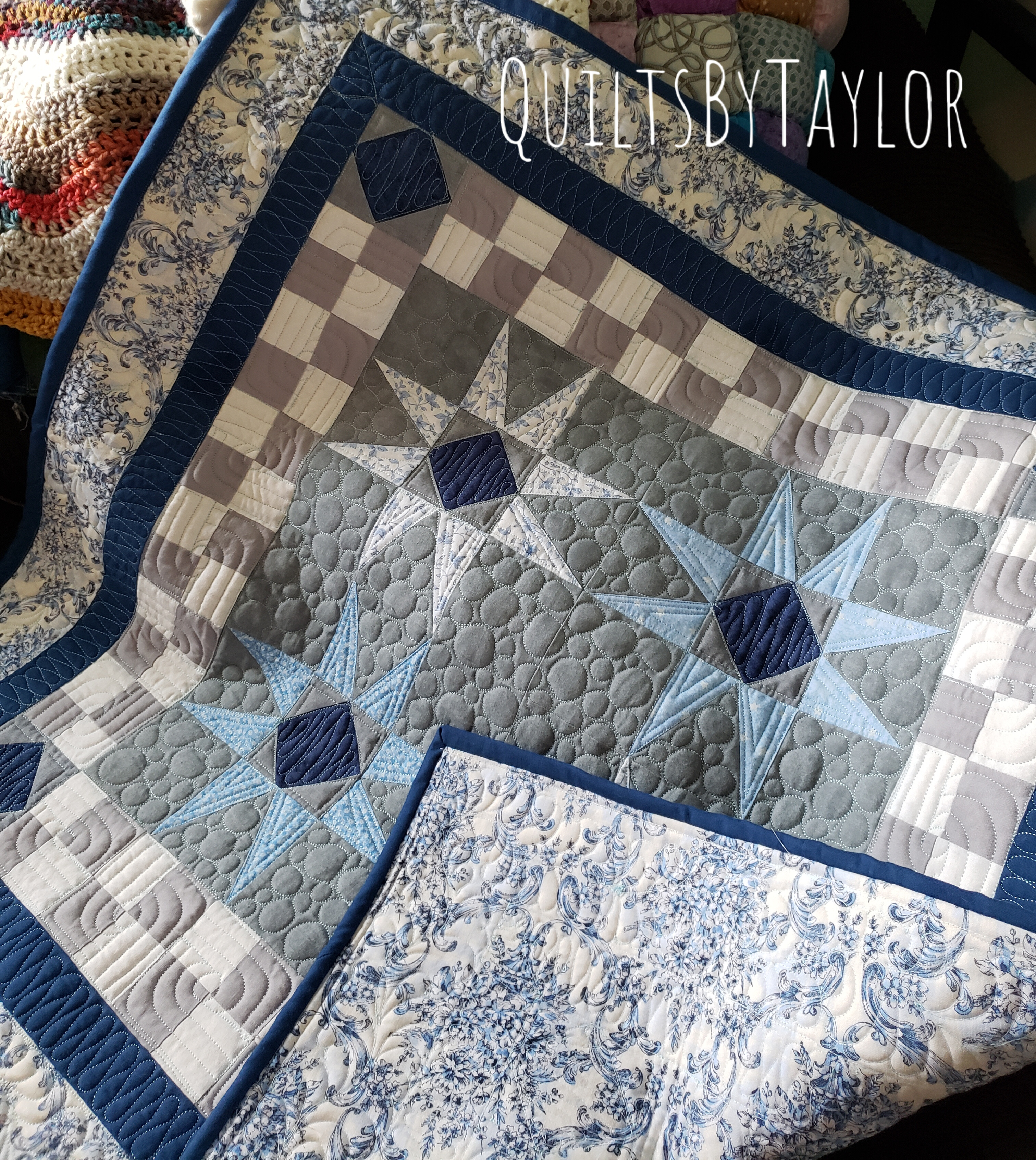
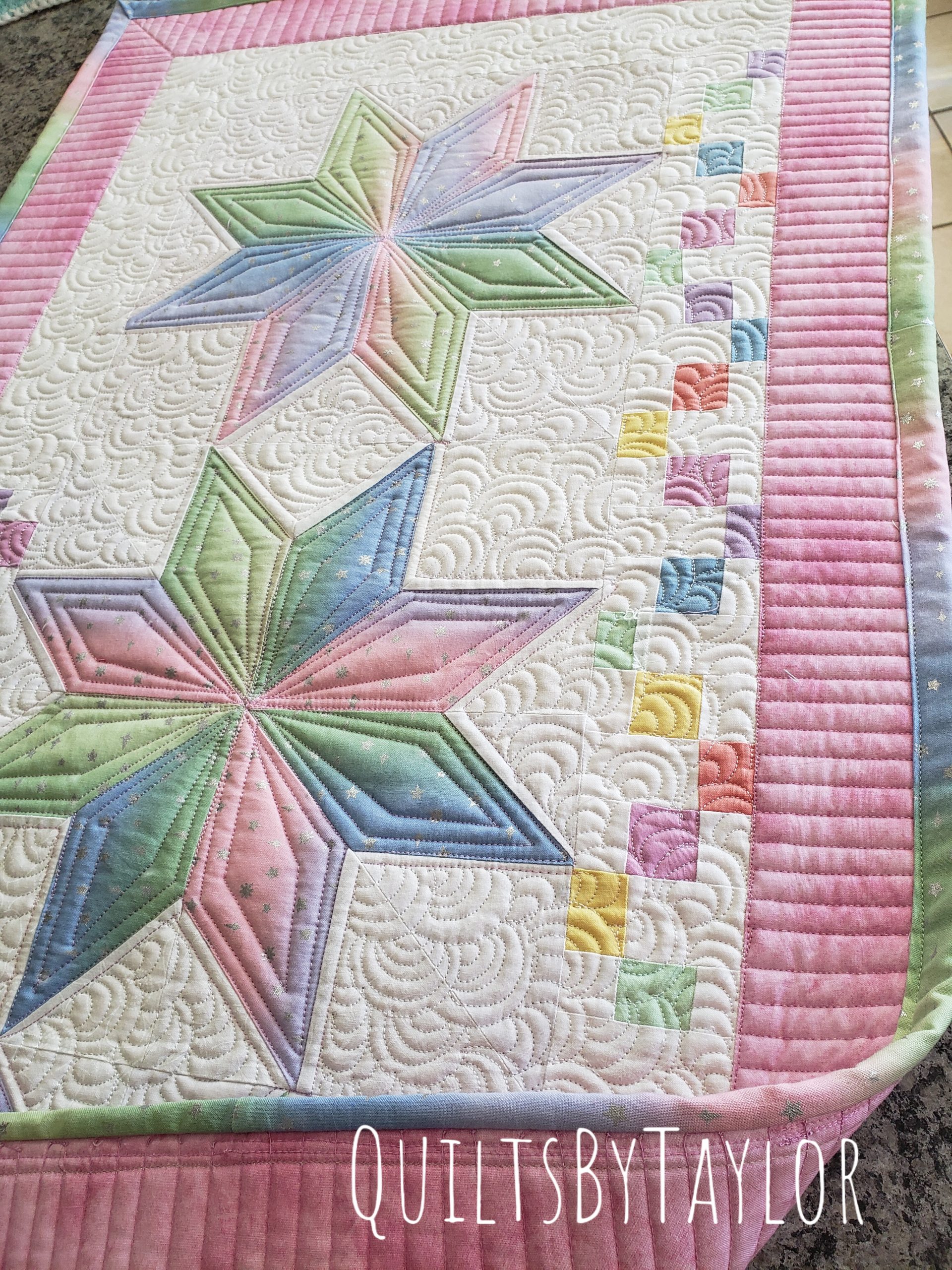
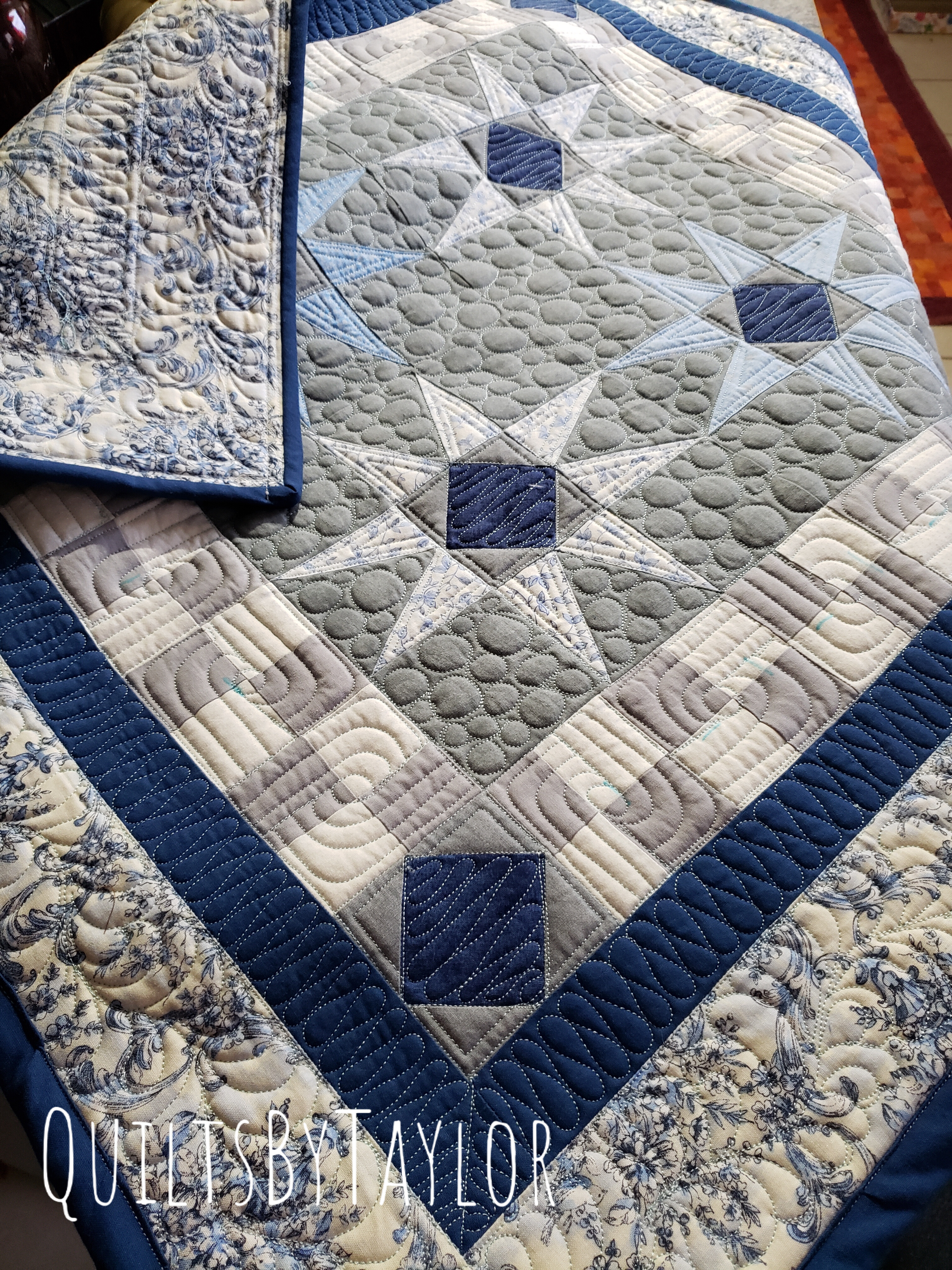
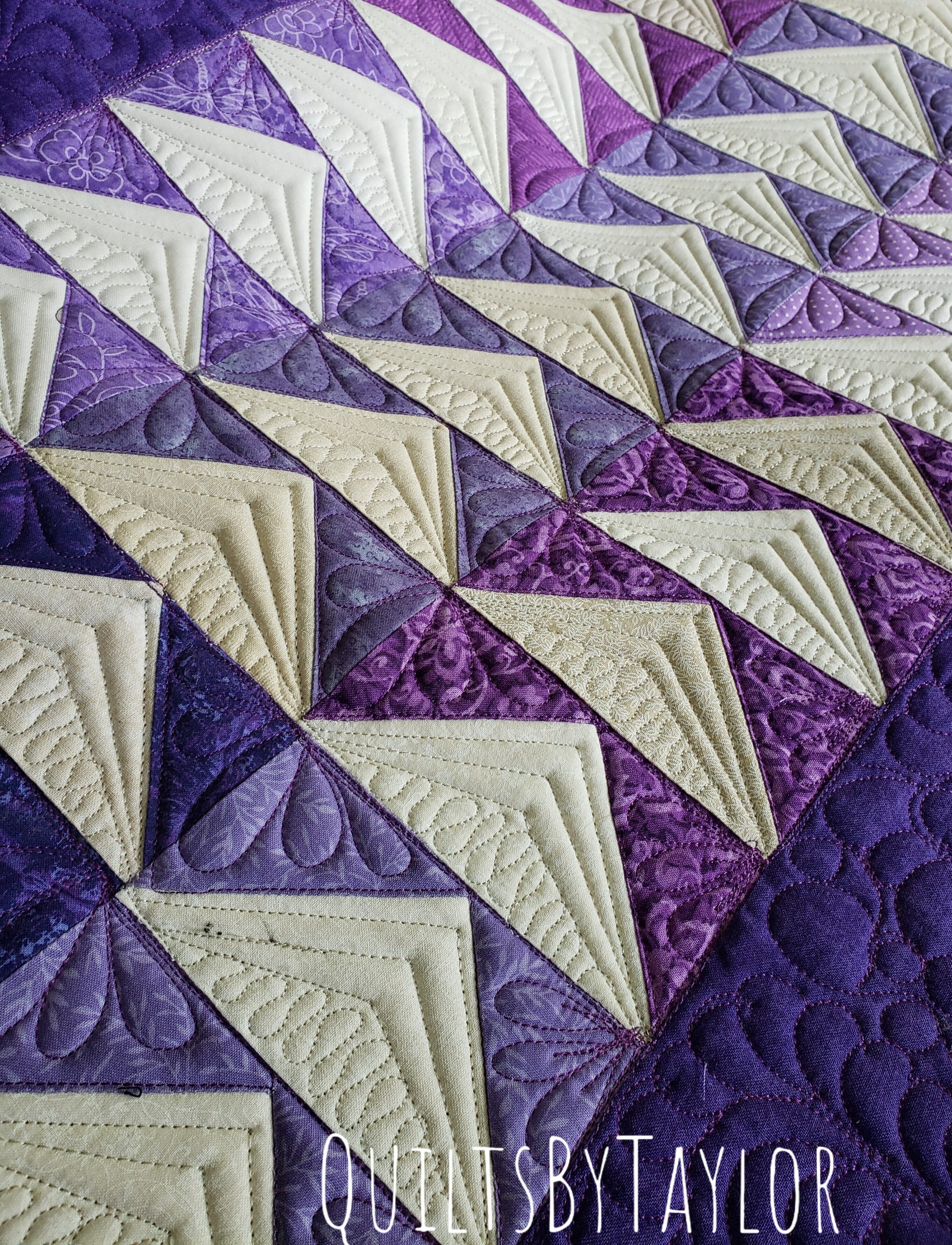
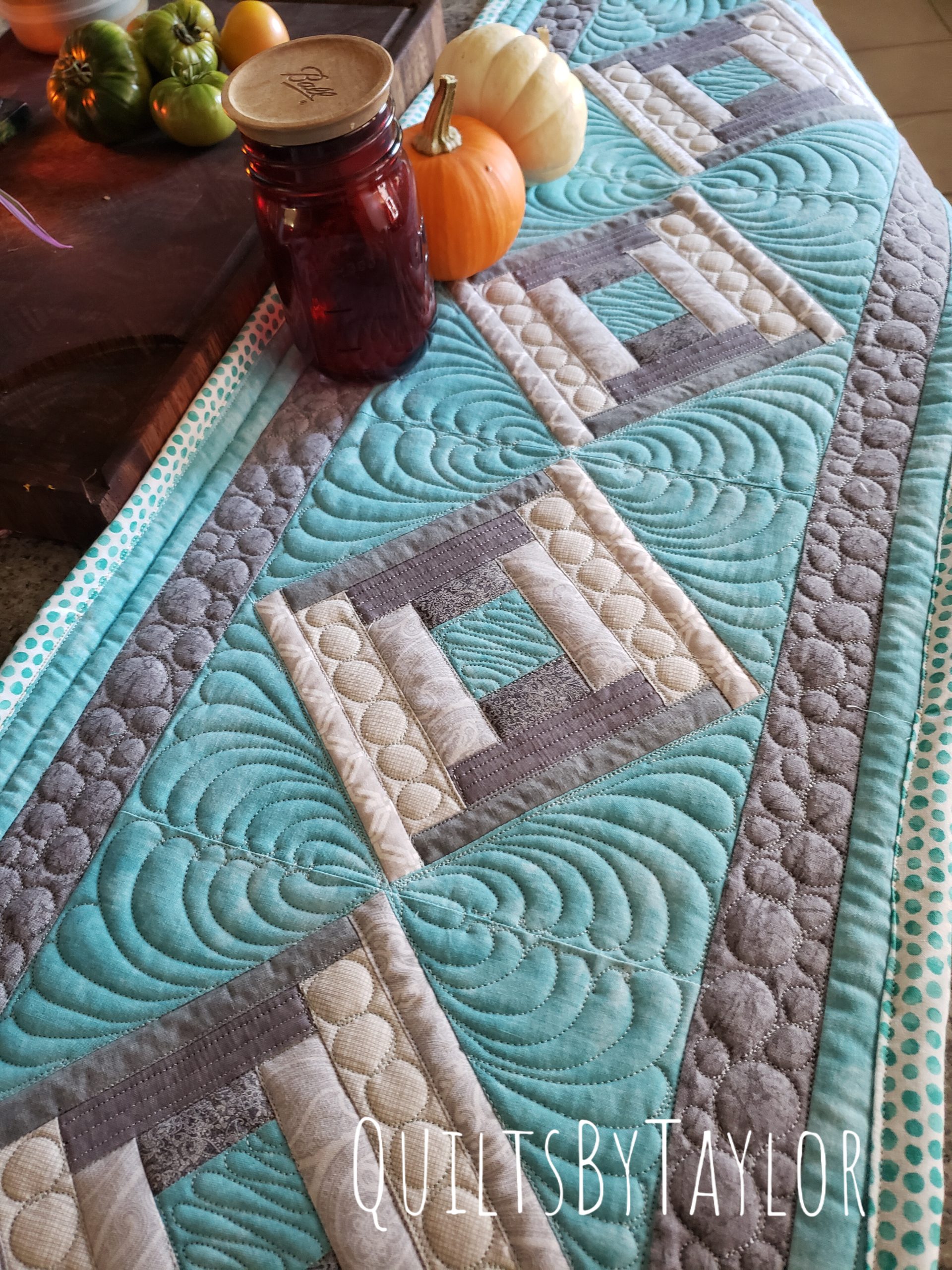
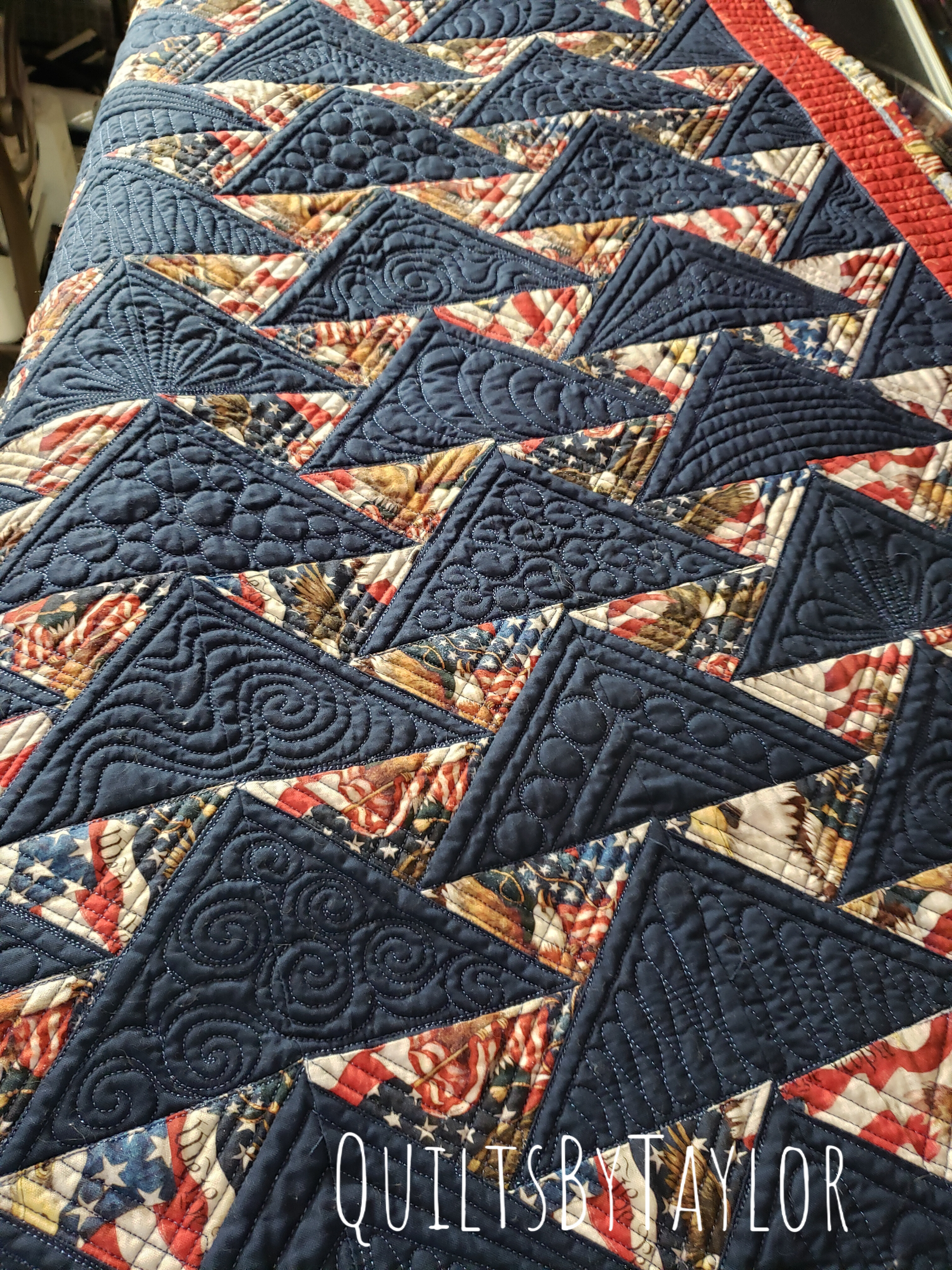
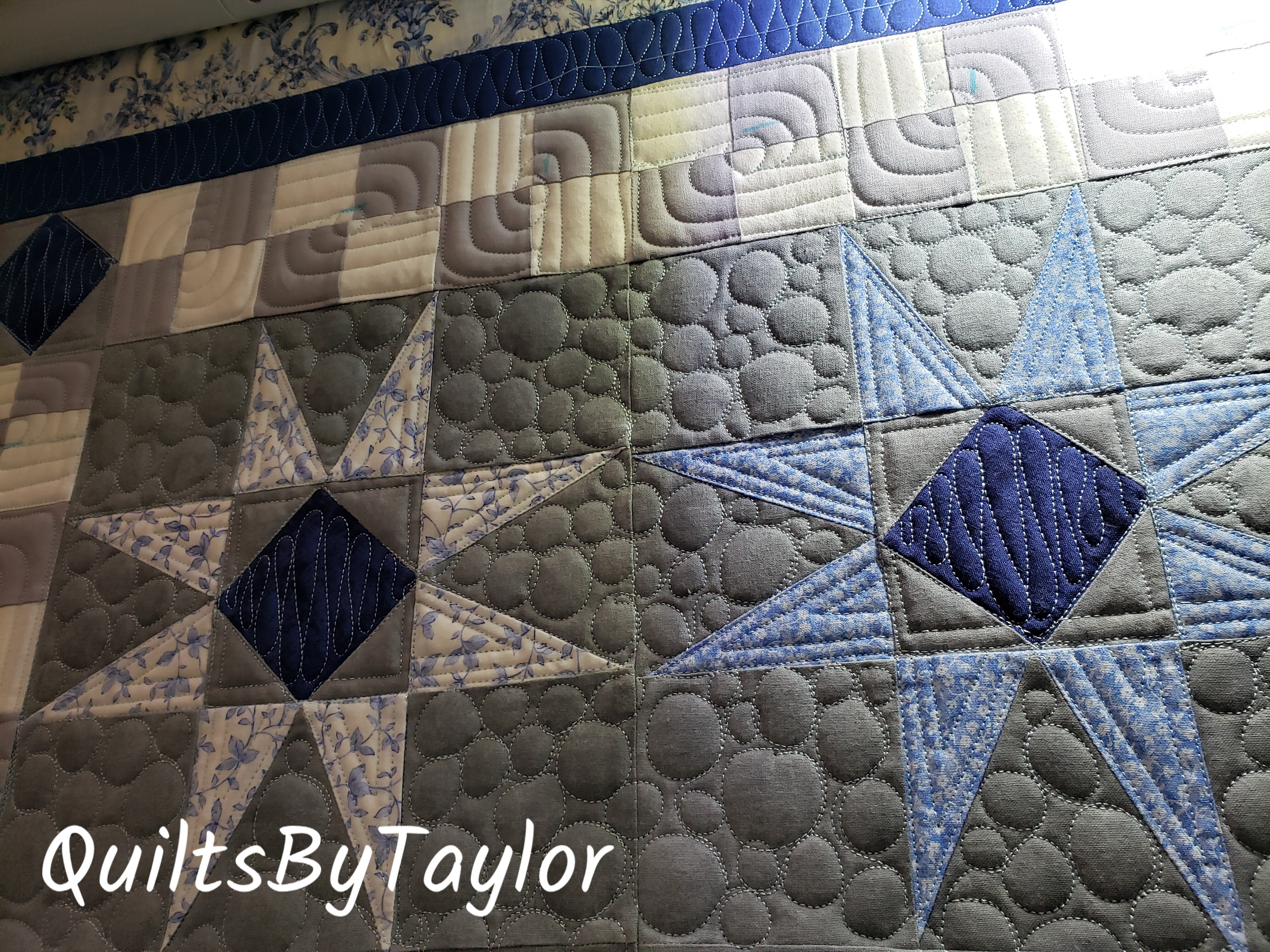
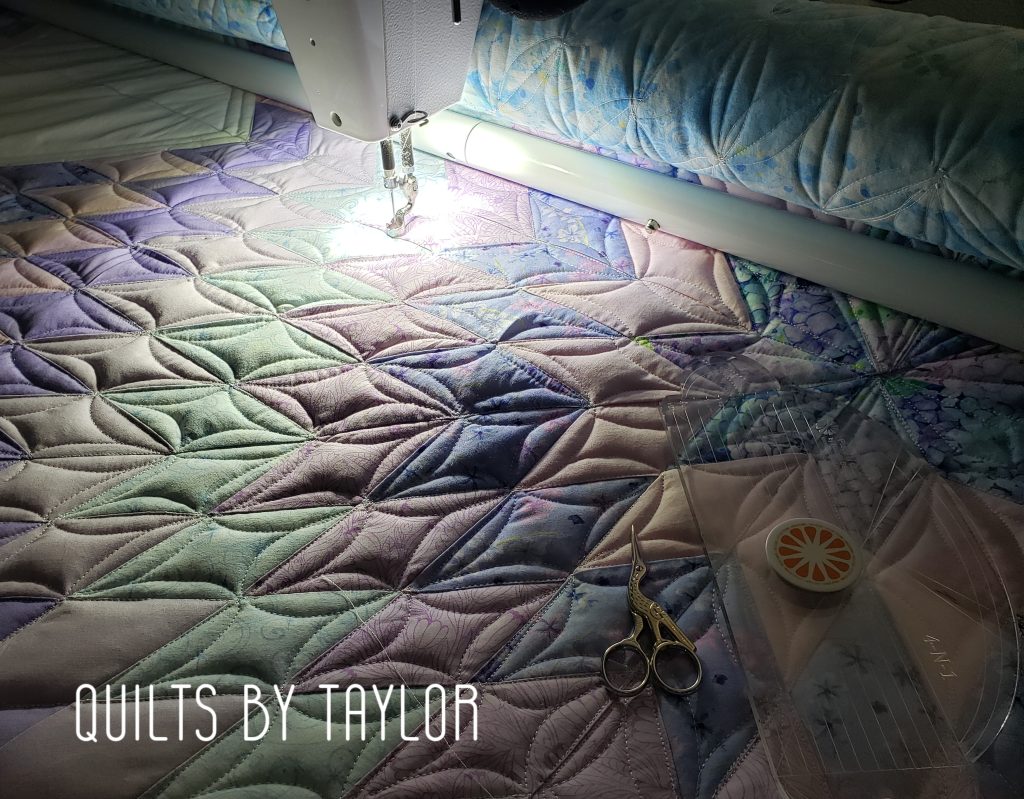
I’ve been busy behind the machine lately — and I’m excited to share something new and close to my heart! I just posted a fresh update on my Free Motion Quilting Blog, where I show the real texture and detail behind my hand-guided quilting. These are the kinds of stitches that make every quilt one-of-a-kind — no computers, just my hands and a steady rhythm.
Many of the photos in this post feature pieces from my New: Home Décor category — smaller handmade quilts and quilted runners, all ready to ship for the holidays. They’re the perfect way to add warmth and color to your home, or a thoughtful gift for someone special.
There’s something special about free motion quilting. Every swirl, curve, and feather you see is guided completely by hand — not a computer. It’s where my love of quilting really shines, and no two quilts ever come out exactly the same.
In this post, I’m sharing a few up-close photos of my hand-guided quilting work. These are the textures and stitch patterns that give each quilt its personality — from the bold lines of Migrating Geese to the classic rhythm of Hunter Star.
My Process in Motion
Free motion quilting is exactly what it sounds like — the fabric moves freely under the needle while I guide the stitching by hand. It’s a balance of rhythm and feel, letting the design come alive as I go.
I like to change up the batting depending on how a quilt will be used. For a soft, everyday quilt, I often use one layer of 100% cotton batting. For a little extra loft and texture, I’ll sometimes pair one cotton layer with one poly layer. And for heirloom or display quilts, double cotton gives that flatter, vintage feel I love.
Each choice affects how the quilting design pops off the surface — the depth of a swirl or the shadow of a feather can change completely just by switching the batting.
Computerized quilting has its place, but it can’t replicate the feeling of true hand-guided free motion quilting. My stitching may not be perfect, but it has life — small variations that make your quilt truly one of a kind.
Each piece is made using cotton thread wrapped in a fine polyester thread. It’s strong, durable, and perfect for everyday use — but it’s also the reason quilts should never be dry-cleaned. Over time, the chemicals can weaken that wrapped thread.